Not a werewolf. There are no wolves here.
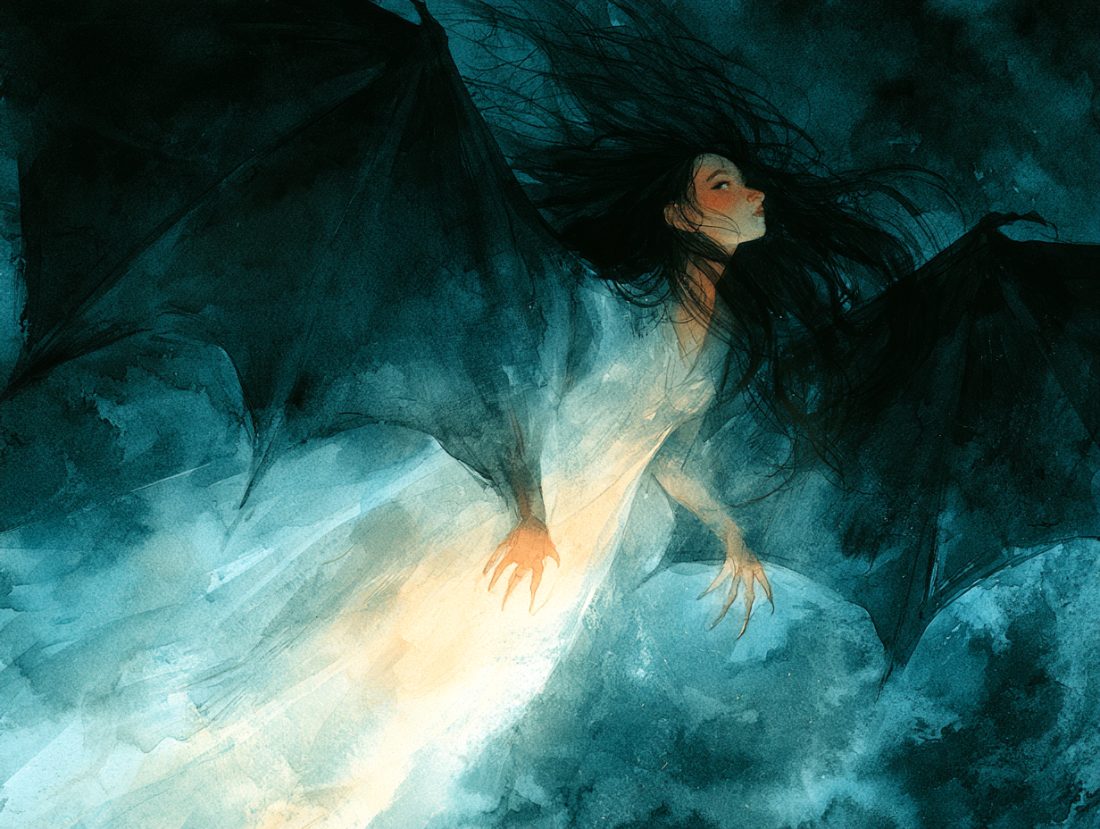
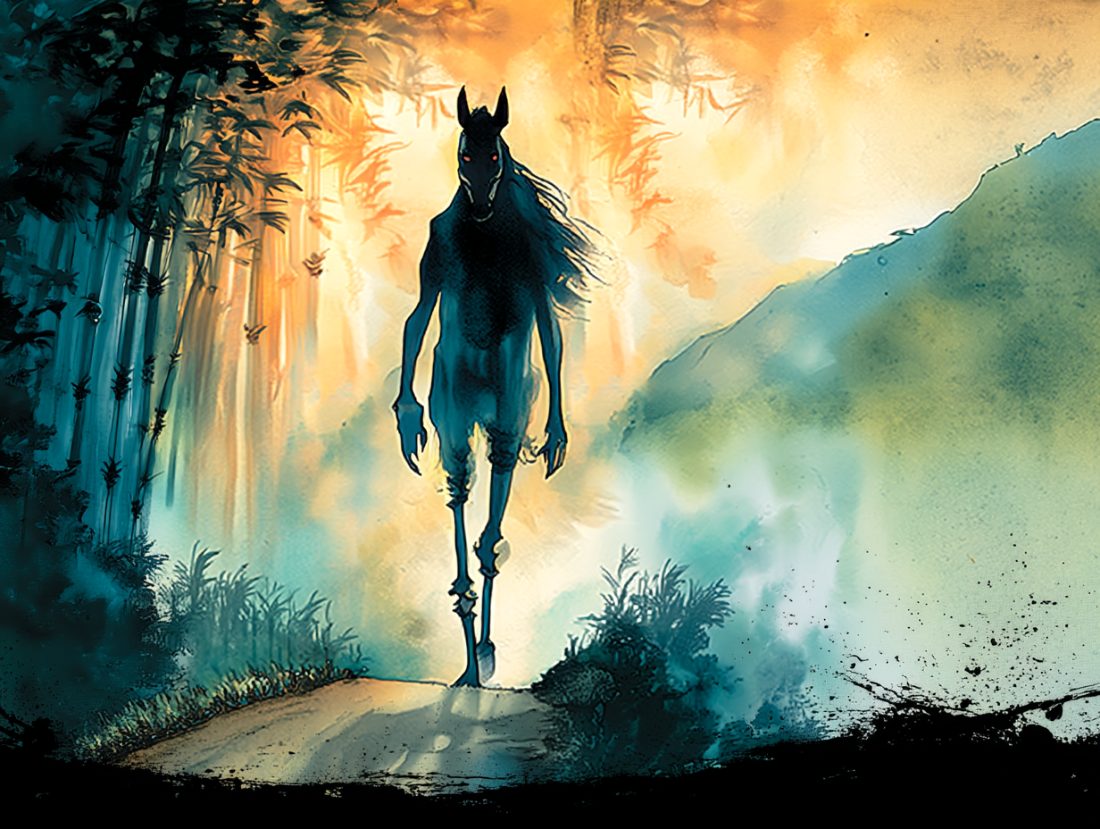
The aswang isn't one monster — it's a whole family of them. The folklorist Maximo Ramos, sometimes called the "Dean of Philippine Lower Mythology," spent the 1960s sorting that family into five kinds: a blood-sucking vampire, a self-segmenting viscera-sucker (the Manananggal is this one), a vindictive witch, a carrion-eating ghoul — and a man-eating creature that transforms into an animal, most often a dog.
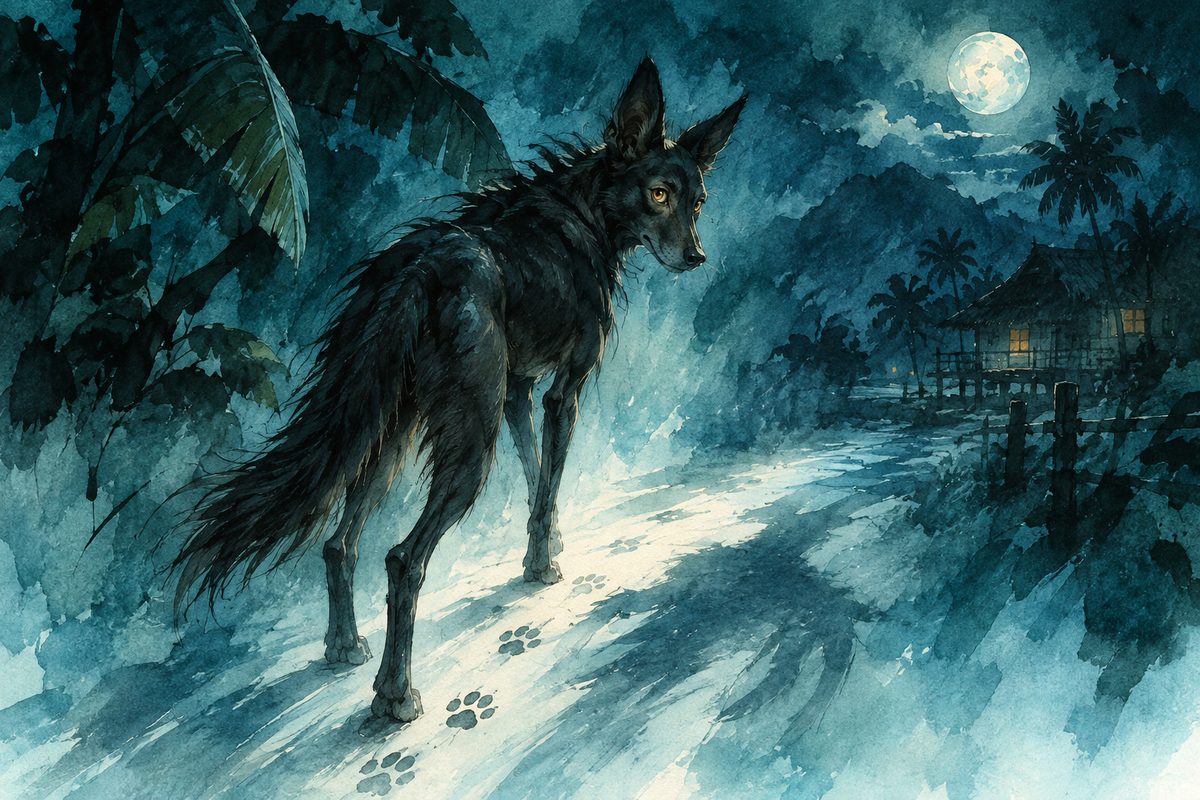
Ramos needed a name for that last one, and a werewolf wouldn't do. In his own words: "Since there are no wolves in the Philippines, the term weredog is more appropriate." He went further: "A werewolf is identified with the fiercest animal in a region, so that Europe has werewolves, China werefoxes, and India weretigers." The Philippines got a dog — which turns out to be the whole argument for why Filipino folklore isn't just Western folklore with the names swapped out.
Field Notes
- Known for: transforming into a dog after dark — cat and pig are also attested, depending on the region
- One of five aswang types: alongside the vampire, the witch, the ghoul, and the Manananggal's self-segmenting kind
- Said to be drawn in by: loose, untied hair — one reason it was worn tied back at night
- Traditional counters: salt, ash, vinegar, spices, holy objects, a stingray's tail, bright lights kept burning at wakes, or a sharp stick wedged between the floor slats
The name nobody expects
Here's the part that has nothing to do with monsters. Filipinos used to call a street dog askal — short for asong kalye, "street dog." Animal-welfare advocates pushed to change that, because no dog is supposed to belong to the street. So the native dog got a new name: aspin, short for asong Pinoy — Filipino dog. It's a word built entirely to give an animal its dignity back.
Which means that when a movie needs a name for its comic-relief weredog, it's often reaching for the same word Filipinos coined out of kindness. Two real histories, one borrowed for a monster and one borrowed for a joke — and both better stories than anything on screen.
In Tiktik
The weredog itself doesn't appear in Book One — its cousin, the Manananggal, does. But the aswang is already in the story: in Chapter Six, Mang Paquito delivers the joke that started this whole entry. "ASWANG!" he shouts, before landing on the punchline — "You know what took Bombita? A dog took Bombita." He's not wrong to be nervous. He's just naming a bigger family than he realizes.
Quick facts
- Named "weredog" by folklorist Maximo Ramos because the Philippines has no native wolves
- One of five traditional aswang types, alongside the Manananggal, a vampire, a witch, and a ghoul
- Loose hair is said to attract it — worn tied back as a precaution
- Aspin ("asong Pinoy") replaced askal ("asong kalye") as the respectful term for the native Filipino dog
- The aswang appears in Book 1, Tiktik: A Summer of Three Names, in Chapter Six